Posts

WHY KEEPING A DAILY JOURNAL IS A POWERFUL TOOL FOR PERSONAL GROWTH

Image
Have you ever found yourself overwhelmed with thoughts and emotions, not knowing how to process them? Do you wish you had an outlet to explore your passions and innermost feelings? If so, then keeping a daily journal might be the perfect solution for you. A journal is a powerful tool that allows you to express yourself in any way that you see fit. Whether you want to write, draw, or collage, it provides a safe space to get your thoughts down on paper and out of your head. Not only does journaling help to de-stress and get to know yourself better, but it also enables you to explore your emotions and ideas and work through your personal journey. Journaling is a soothing practice that has great benefits for your spiritual growth. It helps you to grow in the areas you are most passionate about and acts as an outlet for your feelings. By understanding your emotions and letting go of them, you can act rather than react to the circumstances around you. While it’s great to talk with friends, f...


THE FOUR STAGES OF DEVELOPMENT: FORMING, STORMING, NORMING, AND PERFORMING 

Image
Working in a team can be a challenging and rewarding experience. The concept of Forming, Storming, Norming, and Performing (FSNP) describes the four stages of psychological development a team goes through as they work on a project. Teams move through each stage as they overcome challenges, learn to work together, and eventually focus on accomplishing a shared goal. 1. Forming: The first stage of team development is about defining objectives, and individual roles, building trust, respect, and interpersonal skills. It’s also about developing norms and identifying the resources, skills, and information needed to achieve the team’s goals. Having the right dynamics in a team is essential for success. As Henry Ford said, “Coming together is a beginning. Keeping together is progress. Working together is a success.” 2. Storming: In the second stage, conflicts and competition in personal and professional relationships come to the forefront. It’s crucial to establish a common vision, roles, resp...

BELIEVE IN YOURSELF AND ACHIEVE THE IMPOSSIBLE

Image
We live in a world where people are often judged based on their looks, background, education, and social status. However, history has taught us that these things are not the only factors that determine success. In fact, some of the most successful people in the world have faced incredible obstacles and rejection before achieving greatness. What made them stand out was their unwavering belief in themselves. Think of Albert Einstein, who didn’t speak until he was four and didn’t read until he was seven. His family and teachers thought he was mentally challenged. But he believed in himself and his abilities, and went on to become one of the most brilliant minds in history. Or consider Thomas Edison, who was thought to be stupid by his teachers and even his father. Yet he refused to let their negative opinions define him and went on to invent the light bulb, phonograph, and motion picture camera. These examples prove that success is not just about natural talent, but also about perseveranc...

ANOTHER MAJOR PIECE TO THE PUZZLE - ACTIVITY (PART 2)

Image
Enterprise is better than ease: How much time and effort should we put into a project that we are working on. Keep in mind, our philosophy about our activities and our attitude about hard work will have a direct effect on the quality of our lives. What decisions we make about the ratio of labour to rest will establish our work ethic. Enterprise is always better than ease. Every time we chose to do less then we could, our self confidence will take a direct hit from this error in judgement. If we continue to repeat this process we will soon not only see ourselves doing less, but more importantly perhaps is being less than we could. The good news is we can reverse this process however. At any time we can decide to develop a new discipline of doing math than putting off. Every time we choose action over ease, we develop an increasing level of self-worth, self-respect, and self-confidence. At the end of the day, it is how we feel about any activity that provides the greatest rewards. It is ...

ANOTHER MAJOR PIECE TO THE PUZZLE - ACTIVITY (PART 1)

Image
A parable to start today’s article: A master was set to travel to distant lands. But before his trip, he called three of his servants and gave each of them a talent according to their abilities. To the first servant, he gave five talents; to the second, two, and just one for the last servant. Then he went on his journey. The first two servants went and put their money to work. While the last one dug a hole in the ground and hid what he received. When the master came back, he asked the servants what became of the talents he gave them. The first one proudly replied that he gained 5 talents more with what the master had given him. The second servant also earned two talents more than the initial two he received. When the third servant came forward, he told his master what he did claiming that he did it out of fear. Obviously, the master was very happy with the first two servants. As a reward for what they did, he put them in charge of more things and invited them to share his happiness. As...

IT'S ALL ABOUT ATTITUDE PART 3

Image
We cannot Succeed By Ourselves: Everyone needs other people to help them in achieving their dreams. The attitude of others affects each of us and the attitude of each of us has the capacity to affect all of us. We become a powerful force when each of us understands how powerful all of us are and when all of us understand how valuable each of us is. Imagination is the starting point of all progress. Our attitude about the interconnection of each of us to all of us and all of us to each of us has a great influence on our future. Appreciating Self-Worth is the beginning of progress: What would happen if we took to read the books, took the classes, and discovered new ways to refine our philosophy? What would happen if we developed a new attitude about the past, present, and future? What would happen if we all change our feelings about one another and the importance of each individual to our collective? Just imagine the incredible effect on the future. We each possess enough mental, spiritu...

IT'S ALL ABOUT ATTITUDE PART 2

Image
The Present: The current moment is where our better future begins. The past has given us a wealth of memories and experiences and the present gives us a chance to use them wisely. The present gives us a chance to create an exciting future. The promise of this future demands that we pay a price in the present. The opportunity of the current moment must be embraced or the rewards of the future will be withheld. Our goals and ambitions of the past are bringing to us present rewards. If our current rewards are small, then our past efforts were small. And if today’s effort is small, the future reward will be small as well. Each day brings 1,440 minutes; 86,400 ticks off the clock. Both the poor and the wealthy have the same 24 hours of opportunity.  What will you do with yours? How well we use the day is largely a function of attitude. Right attitude we can seize the day and make a new beginning. Each new day offers the opportunity for change. We can adopt a new attitude of who we are, ...

IT'S ALL ABOUT ATTITUDE PART 1

Image
Our lives are affected by the decisions we make, which are influenced heavily by the knowledge that we have and the feelings that we feel. As we spoke about last time, philosophy deals essentially with the logical side of life (information and thinking habits) while attitude focuses primarily on the emotional issues that affect our very being. What we know (knowledge) determines our philosophy, while how we feel about what we know, determines our attitude. It is our emotional nature that governs most of our daily conduct professionally and personally.  It is these emotional experiences that determine our behaviour. How we feel about things will freeze us or inspire us to take action each given day.  Like thoughts, emotions can propel us either way. Note: how we feel about the areas of the wheel of life (including people, our work, our homes, our finances, and the world around us) form our attitude.  (look up Wheel of Life in our blog) With the right attitude, humans can m...

PRINCIPLES OF SUCCESS: PERSONAL PHILOSOPHY

Image
I would like to start a series on the Principles of Success. In starting this journey, we must start with our personal Philosophy. A major factor in how our lives turn out is how we think. When we combine what we know with the process of how we came to know it, we start to create our personal philosophy. Many sources contribute to this philosophy, and as adults we filter all information through this lens we have created over the years. So anything that contradicts our beliefs is often quickly rejected. Our beliefs determine our value systems. Our beliefs lead us to what we believe is valuable and how we spend our time, money, and energy is based on these values. Our personal philosophy is like the large sail on a sailing boat. The main thing that sets our sail is how we think, and that determines where we arrive. When the winds change, so must we. How we think and then how we respond is what creates change, positive or negative. Every experience is etched into our brains, so we need to...

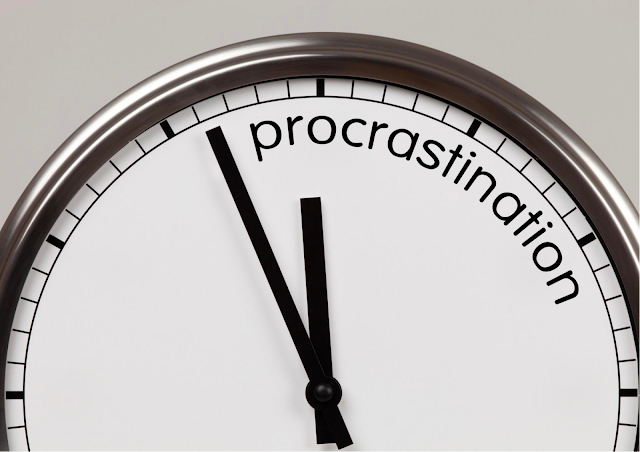
THE ART OF PROCRASTINATION AND WHAT TO DO ABOUT IT

Image
Jeff had worked as a support worker for 8 years. He really wanted to work as an Adventure Therapist and as a mentor to young people wanting to get into the Australian Football League (AFL). As we explored the factors holding him back from this, it came down to fear holding him back and his strategy: Procrastination! Jeff wanted support in working out how to overcome procrastination. So let’s look at what is procrastination? The etymology of the word  procrastination  is derived from the Latin Verb Procrastinate: ‘to put off until tomorrow’. Procrastination is the avoidance, delaying, or putting off a task that needs to be done. Neil Fiore, author of The Now Habit, defined procrastination as “a mechanism for coping with the anxiety associated with starting or completing a task or decision.” It is good to write down what you will have achieved once you have completed the task that you are procrastinating over. People procrastinate for all sorts of reasons. The 4 most common reas...

DO YOU TREAT YOUR BODY LIKE A WOODSHED?

Image
Lots of people treat their bodies  like a woodshed. That is to say that they force it to function, make it work when they need it to (even if it's rundown), throw things in it without respect, and don’t take care of it. They then find that a few years down the track their shed is messy, falling down, cobwebs, spiders, and snakes all over the place and it is unsafe. Often it is at this point, that they then start to take care of it. Spending a little time regularly to maintain the woodshed is much wiser, easier, and financially cheaper, and saves the risk of it falling down or putting time and money into trying to fix it. Abbie-Lea Verco

NAILS IN THE FENCE

Image
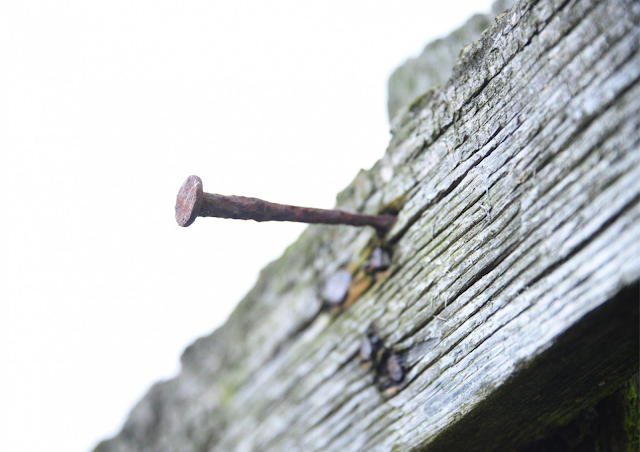
There once was a little boy who had a bad temper. His Father gave him a bag of nails and told him that every time he lost his temper, he must hammer a nail into the back of the fence. The first day the boy had driven  37 nails into the fence. Over the next few weeks, as he learned to control his anger, the number of nails hammered daily gradually dwindled down. He discovered it was easier to hold his temper than to drive those nails into the fence. Finally, the day came when the boy didn’t lose his temper at all. He told his father about it and the father suggested that the boy now pull out one nail for each day that he was able to hold his temper. The days passed and the young boy was finally able to tell his father that all the nails were gone. The father took his son by the hand and led him to the fence. He said, “You have done well, my son, but look at the holes in the fence. The fence will never be the same. When you say things in anger, they leave a scar just like this one. Y...

V FORMATION

Image
Ever watched in awe as a flock of birds  fly in a ‘V’ formation? The Flying Geese Story Reference:  Dr. Harry Clarke Noyes, ARCS NEWS, Vol. 7, No. 1, January 1992 Next autumn, when you see Geese heading South for the Winter, flying along in V formation, you might consider what science has discovered as to why they fly that way:  as each bird flaps its wings, it creates an uplift for the bird immediately following. By flying in V formation the whole flock adds at least 71% greater flying range than if each bird flew on its own. People who share a common direction and sense of community can get where they are going more quickly and easily because they are traveling on the thrust of one another. When a goose falls out of formation, it suddenly feels the drag and resistance of trying to go it alone and quickly gets back into formation to take advantage of the lifting power of the bird in front. If we have as much sense as a goose, we will stay in formation with those who are ...

FINDING YOUR PURPOSE

Image
The path that led me to teaching was a twisted and windy one. I didn’t set out after school to get a degree in education, mould young minds, and change the world. Finding my purpose as an educator  was a long process, one that didn’t fully emerge until after more than a decade in the classroom. In high school, I took two classes that immediately defined what I thought I wanted to do with my life, Journalism and Business. I was going to own my own theatre company and be a playwright and then have my own column in a local newspaper, and I would speak to the world. Now, there are people who are sharing inspiration through writing and theatre with the world, but it’s a hard world to crack into, and theatre and journalism can be daunting for a 20-year-old with a baby son, and high values on ethics and respect. I found the theatre became about making money and creating a “product” and I never did follow through with my journalism dreams. I didn’t feel like I was making a difference, and ...